


Polyurethane Polymers vs Silicone Compounds
Epic Resins offers a broad range of polyurethanes, engineered to meet the demands of diverse applications. A common question we hear is whether silicone-based systems are a better choice.
Silicones have some advantages, like resisting degradation at high-temperatures above 200°C. However, polyurethanes deliver on formulation versatility. Urethanes can be designed with superior thermal, physical, and chemical properties. Polyurethanes offer excellent protection at a lower cost—making them the preferred solution for many potting applications.
8 Advantages of Replacing Silicone Potting with a Polyurethane
-
More Economical Polymer:
Polyurethanes often offer a lower cost for the raw materials and application processes they use. -
Low Water Vapor Permeability (WVP):
Polyurethanes create a superior moisture barrier, significantly reducing water migration to protect sensitive components from corrosion and failure. -
Minimized Outgassing:
Our polyurethanes are engineered with quality materials to exhibit exceptionally low outgassing, critical for protecting optical surfaces and sensitive sensors in enclosed environments. -
Exceptional Operating Temperature Range:
Polyurethanes offer reliable operation across a wide thermal range of -60°C to 150°C with short excursions into higher temperatures, ensuring long-term durability. -
Optimal Bond Strength:
Our polyurethanes are formulated for strong covalent bond strength to various substrates and casings, including metals, plastics, and ceramics, ensuring long-term durability. -
Improved Physical Attributes:
Polyurethanes offer higher strength, elongation and abrasion resistance. -
Enhanced Chemical Resistance:
Polyurethanes can be formulated to resist degradation from oils, solvents, and other harsh chemicals, extending product life. -
Wider Formulation Latitude:
We can formulate our polyurethanes as soft as a silicone gel and as rigid as a highly cross-linked epoxy.
Precision Material Engineering
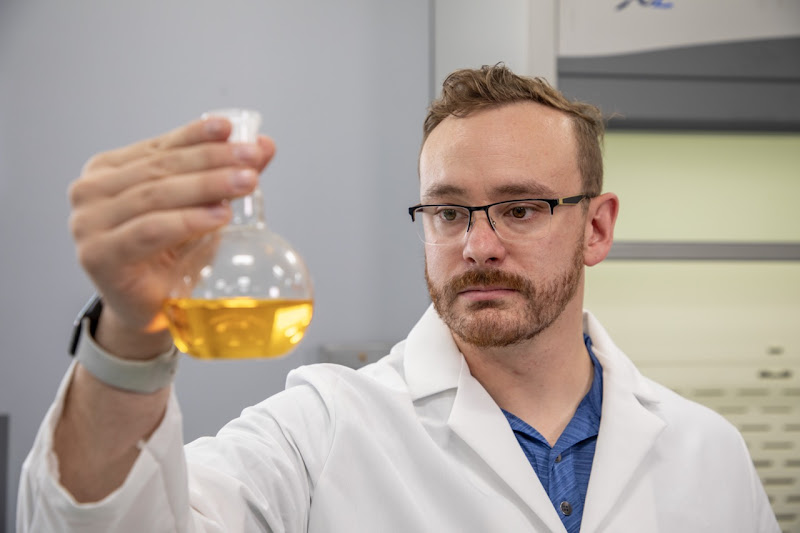
Our advanced laboratory capabilities enable us to deconstruct and analyze the molecular structures of competitive polyurethanes and silicones. This enables us to:
-
Reverse Engineer Formulations: Precisely replicate or improve upon competitor materials for a fraction of the cost and time.
-
Tune Critical Properties: Precisely adjust gel and cure time, viscosity, CTE (Coefficient of Thermal Expansion), modulus, and Tg (Glass Transition Temperature) to prevent issues like over-penetration or shrinkage.
Why Material Choice Matters
From our high-quality raw materials to our ability to engineer polymers to specific properties, Epic Resins delivers polyurethanes that are verified and reliable.
Alternatives to Silicone Potting Compounds:
- Epic S7325 is a low-hardness aromatic urethane potting compound
- Convenient 1:1 by volume mix ratio
- Designed to pass UL 94 HB at 1.5 mm
- Specifically designed for potting/casting applications that require low hardness, a convenient volumetric mix ratio and short working times
- Useful for applications requiring a re-enterable compound
- Epic RM2016 is a two-component polyurethane potting compound
- Medium pot life
- Convenient 1:1 by volume mix ratio
- Formulated with low hardness and a very low glass transition temperature
- Epic S7281 is a two-component aliphatic polyurethane potting compound
- Designed with a fast cure
- Convenient 1:1 by volume mix ratio
- Excels in high-temperature applications, displaying very low weight loss at 125°C over extended periods of time
- Due to the low hardness and very low glass transition temperature, it allows expansion and contraction of solder joints and delicate electronic components without causing failures from mechanical stresses
- Epic S7475 is a two-component polyurethane compound
- Designed for potting electronic control modules (ECM's) and a wide variety of electronic devices with an operating range of -50°C to 130C°C
- Low mixed viscosity allows the material to flow into intricate areas under printed circuit boards and other tight-tolerance areas
- 4:1 by volume mix ratio allows the system to be very adaptable for meter mix and dispense processing
- Very low hardness in combination with the low Tg provides excellent flexibility, allowing delicate surface-mounted devices (SMDs) to expand and contract during thermal cycling and thermal shock
- Has shown extremely low weight loss at 130°C, for applications that generate a great deal of heat
- UL 94-V0 recognized at 4.8 mm
- RoHS compliant